Event structure: native Voice Quality of Service
The Voice Quality of service events results from the processing of the voice
samples carried over :
- a RTP flow resulting from IP / UDP packets over LAN or WAN interfaces
- a Byte-TS flow recorded over TS of ISDN Bchannels, SS7 links, E1/T1 Trunks
Clarinet Event-Editor: QoS display
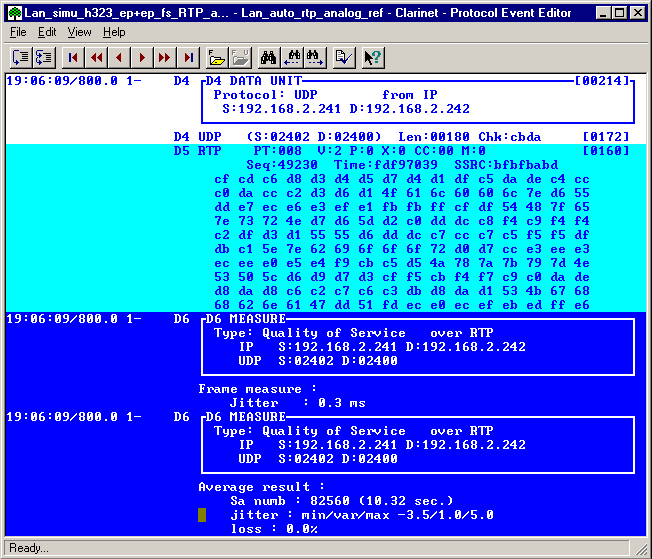
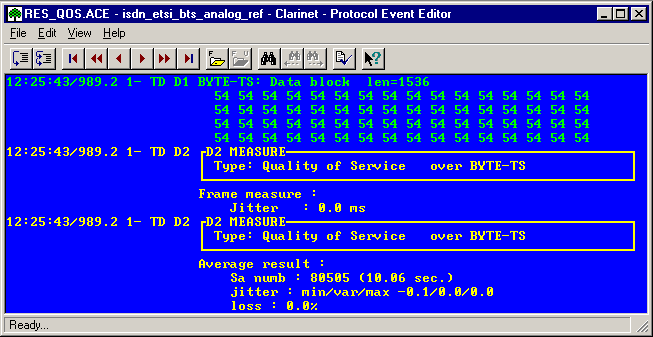
The editing of the Voice quality events allows to
display the content of the different fields:

|
Event information |
Date |
Date of the source event (RTP or BYTE-TS)
in
the format: hh:mm:ss/xxx.y |
|
| N |
The interface number which identifies the
Clarinet-interface connected to the host. |
| Dx |
The decoding level as specified in the
filter (protocol stack). |
| Type |
Provides the origin of the information
(RTP or BYTE-TS)
For RTP data type, the Voice QoS events refer to the IP flow
identification by including the IP addresses and the UDP port
addresses in the header. |
|
Frame measure |
Generated after each RTP or
BYTE-TS event taken into account in the QoS processing
(the quality measurement type should be different from Off
off in
the filter/Analog Measurement tab). |
|
| Jitter |
The value of the jitter in ms:
- <0 the packet arrived later the expected time
- >0 the packet arrived earlier the expected time
|
|
PSQM note
(Speech %) |
Upon authorization.
From 0.00 (best) to 6,50 (worst).
percentage of speech within the voice samples.
|
|
|
Average results |
Events periodically generated (value Delay between measurement
specified in the filter/Analog Measurement tab).
Values can be optionally reset at the
beginning of every cycle according to the filter/Analog Measurement configuration, and then provide
partial countings
|
|
|
Sa-numb
|
Number of samples and time (milliseconds).
|
|
PSQM note
(Speech %)
|
Upon authorization.
Value from 0.00 (best) to 6,50 (worst).
percentage of speech within the voice samples.
|
|
|
Max
|
Max PSQM value.
|
|
|
Jitter
|
values of:
|
|
|
loss
|
% of lost samples of voice.
* No significant over BYTE-TS.
|
|
PESQ note
|
Upon authorization.
From 0.00 (worst) to 4,50 (best).
Negative value is a non-valid measurement.
|
|
|
|
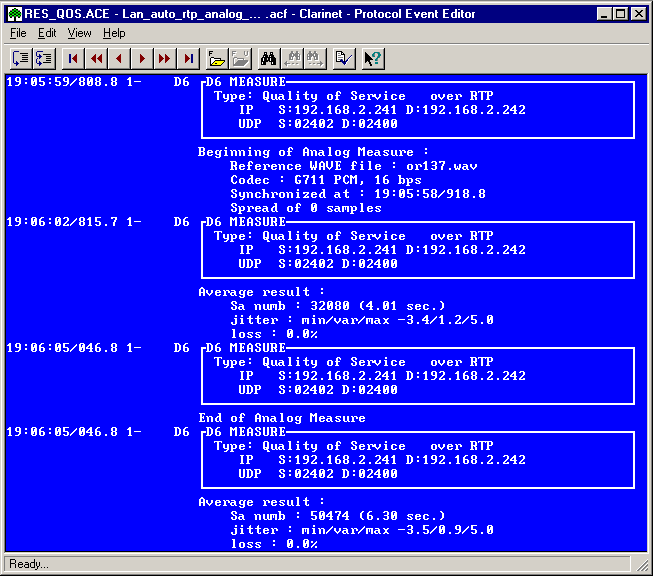
Beginning of Analog Measure |
Generated while recognizing the beginning sequence of the reference file in the flow of samples,
with the following settings in the filter/Analog Measurement tab:
|
|
|
Reference WAVE file
|
Name of the used reference file.
|
|
|
Codec
|
Reminder of the encoding specifications of the reference file.
|
|
|
Synchronized at hh:mm:ss/xxx.y
|
To compute the delay between two measures.
|
|
|
Spread of x samples
|
Indication for the efficiency while recognizing the beginning sequence of the reference file.
|
|
|
|
End of Analog Measure |
Generated while recognizing the ending sequence of the reference file in the flow of samples,
with the following settings in the filter/Analog Measurement tab:
- the quality measurement type = One time or Auto
- valid Reference file
|
|

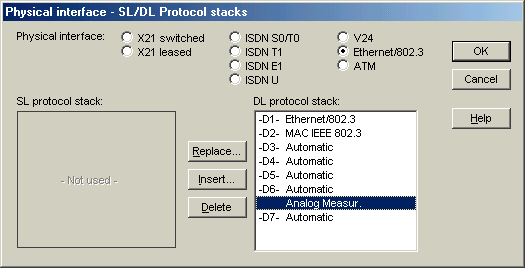
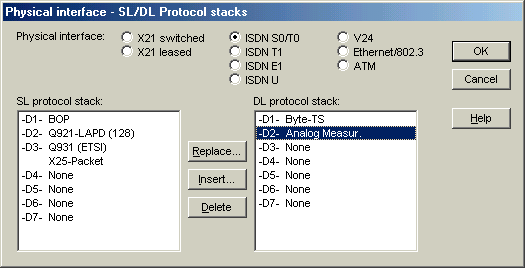
"Analog measurement", a new type of data can be selected
from the protocol stack of the filter to generate and display the Voice Quality
of Service events.
The rules are defined in the RFC 1889.
Jitter processing methods
The Jitter on a determined period is calculated by :
- the sampling rate set in the filter
- getting the date and the length of the data flow event (RTP or BYTE-TS)
- comparing the date of the data flow event and the expected date
Example:
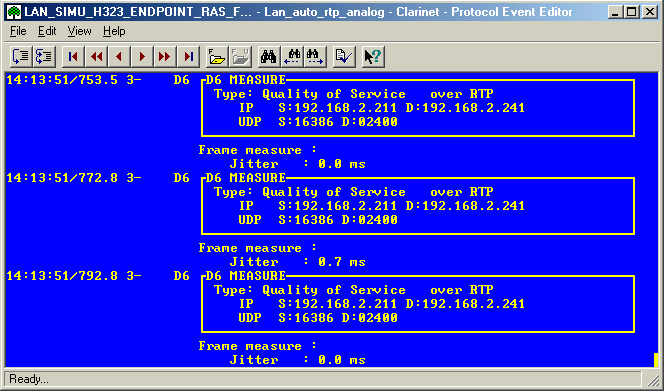
- 8000 samples / second in the filter; Alaw= 8 bits (1 byte)
- length of the RTP event = 160 bytes -> 1 packet every 20
milliseconds
- date of RTP event number 1 = 14:13:51/753.5
- date of RTP event number 2 = 14:13:51/772.8
- date expected= 14:13:51/753.5 + 20.0 = 14:13:51/773.5
- difference 773.5 - 772.8 = 0.7 ms
- date of RTP event number 3 = 14:13:51/792.8
- date expected= 14:13:51/772.8 + 20.0 = 14:13:51/792.8
- difference 792.8 - 792.8 = 0.0 ms
Average processing methods
The Delay between measurement
specified in the filter/Analog Measurement is the duration for periodic generation of the Average result
events. Each time this duration is elapsed, the Average result event is generated
after the closest RTP (or Byte-TS) event.
Sa numb
- The number of samples results from counting of the
samples carried in the RTP packets (or Byte-TS events) taken into account in the QoS processing.
- The time of the sampling is initialized by the first RTP packet (or
Byte-TS event) taken into account in the QoS processing.
Values of the Average result events can be optionally reset at the
beginning of every cycle according to the filter/Analog Measurement configuration, and then provide
partial countings.
PESQ processing methods
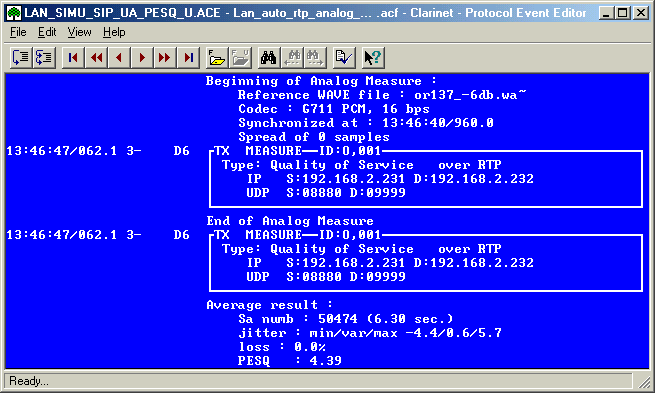
The "Auto" mode of Quality measurement processing events
generated from execution of profiles using the PESQ resources allows to include
communications ID information in the events:
- ID: O = Outgoing
- ID: I = Incoming
The "End of Analog Measure" event is joined with the last
average result event. When the PESQ processing is allowed, the PESQ MOS value is
added to the event.
| 

